
Venue & Logistics
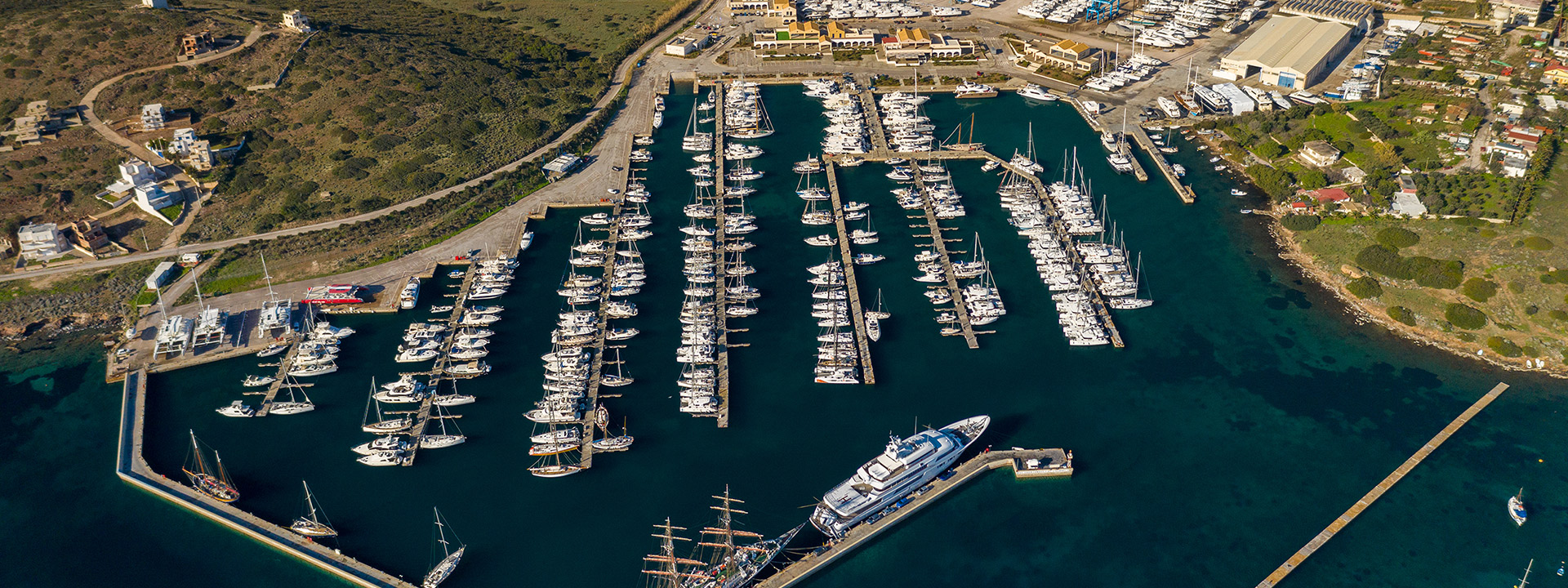
A port city with a proud maritime tradition, Lavrio is only 40 minutes from Athens Airport and surrounded by the crystal waters of the Aegean.
Getting There (Shipping & Transport)
From the UK and the Netherlands there is a Ro-Ro service to Piraeus. Pick up from Piraeus and delivery to Lavrio is possible for limited number of boats, through prior arrangement with the secretariat. Fees and details relating to such transports to be discussed at the time of expressing interest.
From Central Europe one can either come to Lavrio by road through Serbia, then Northern Macedonia and then Greece. Or via Italy to Patras and then 3hrs drive to Lavrio. From Italy the ferries to Patras are daily from Ancona, Venice, Bari or Brindizi.
Boats can travel in the ferries unattended. Pick up from Patras and delivery to Lavrio is possible for limited number of boats, through prior arrangement with the secretariat. Fees and details relating to such transports to be discussed at the time of expressing interest.
- Piraeus Port: ~1 hr drive from to Lavrio
- Lavrio Port: just 10 min from Olympic Marine
- Patras Port: Ferry arrival from Italy, ~3hrs drive from Lavrio
- Customs: EU teams = simple entry; Non-EU = ATA Carnet recommended
- Local freight forwarders available via OA
Driving in Greece
Drive on the righthand side of the road. Most of the driving rules and
regulations are similar to those in the rest of the European Union. Unless
you're a member of the European Union, you'll need to acquire an International
Driver's License (IDL). You also need a valid registration and proof of
internationally valid insurance (check beforehand with your insurance company)
in addition to your IDL.
Using the horn: Technically, using your car horn is illegal
in towns and urban areas except in the case of emergencies. However, on high
mountain roads, make a short beep before going around a blind curve to alert any
oncoming traffic of your presence.
Seat belts: Seat belts must be used at all times.
Speed limits: Typically, urban areas have speed limits of 50
kilometers per hour while high ways have a speed limit of 110-130 kilometers per
hour.
Toll roads: Highways do require tolls, varying on the type
of vehicle, and which can be paid in cash or debit/credit card on the toll
booths located on the road.
Cell phones: It is illegal to use your cell phone while
driving in Greece, unless via a hands-free system. Violators can be stopped and
issued a fine.
In case of an emergency dial 112 for multi-language help.